
8 Traditional Vietnamese Dishes Worth Seeking Out, From Hanoi to Your Neighbourhood in Canada
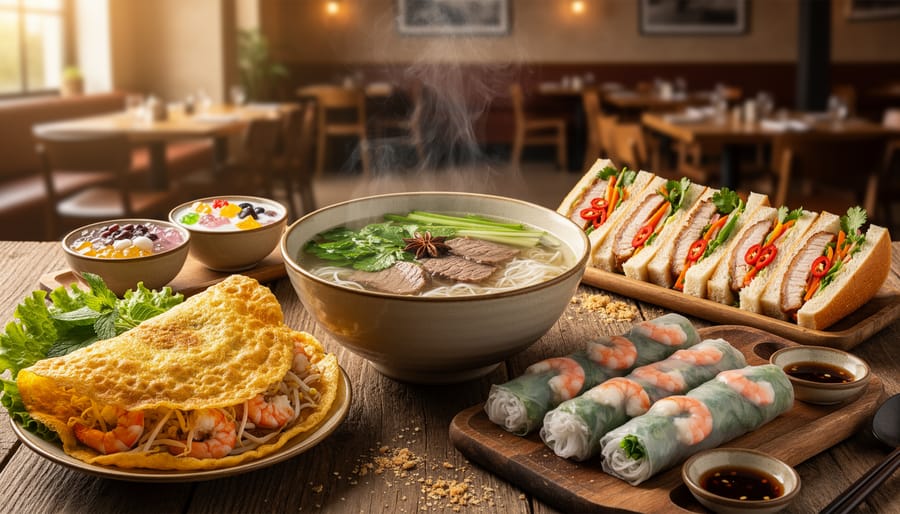
November 23, 2026Eight dishes cover most of what Vietnam puts on a table: phở, bánh mì, bún chả, gỏi cuốn, cơm tấm, bún bò Huế, bánh xèo, and chè. Between them you get soup, noodles, rice, rolls, a crispy pancake, and dessert, drawn from the north, the centre, and the south. Learn these eight names and you can walk into almost any Vietnamese restaurant, in Hanoi or Hamilton, and order with confidence.
I chose them by asking three things. Is the dish truly traditional? Can you find it on a menu without a translator? And does it taste distinctly different from the others on the list? That last question kept the roundup tight. Eight dishes you’ll remember beat twenty you’ll forget.
I still remember my first proper bowl of phở in a Canadian winter. Steam fogged the restaurant windows, the broth smelled of star anise and charred ginger, and the cold outside simply stopped mattering. Many Vietnamese families here eat phở the way other families eat Sunday roast, as a ritual that says home. If you’re newly moving to Canada a steaming bowl like that can be the fastest way to feel less far away. And if you’re following the latest Canada journey updates you’ll find these dishes waiting in most big Canadian cities.
Think of the list below as a friendly map. Start anywhere.
How We Chose These Dishes: Tradition, Regional Roots, and Where You Can Find Them in Canada
Every dish here earns its place the same way: it has deep roots in Vietnamese home cooking or street food, and you can realistically find it today. I put the list together from years of eating at family tables, at pavement stalls, and in Vietnamese restaurants across Canadian cities, so treat it as a curated guide and not a ranking of “the one true best.”
Here is what I looked for:
- Traditional roots in everyday Vietnamese home and street cooking
- Balance across northern, central, and southern Vietnam
- A mix of soups, noodles, rice plates, rolls, pancakes, and sweets
- Something for first-timers and for adventurous eaters
- Easy to find on menus in Canadian Vietnamese restaurants
That balance matters to me. Hanoi’s gentle, clean flavours, Huế’s bold heat, and Saigon’s sweeter, herb-heavy plates all taste different, and a good list should let you taste that range. I also wanted dishes you can order on a regular Tuesday at a neighbourhood spot in Toronto or Vancouver, not just ones you would have to fly across the world to try.
Please read this as a starting point, not a final word. Vietnamese cooking varies enormously from region to region and even from one family kitchen to the next. Your grandmother’s version of a dish may differ from mine, and both can be completely right.
1. Phở: The Fragrant Noodle Soup That Starts Many Vietnamese Mornings
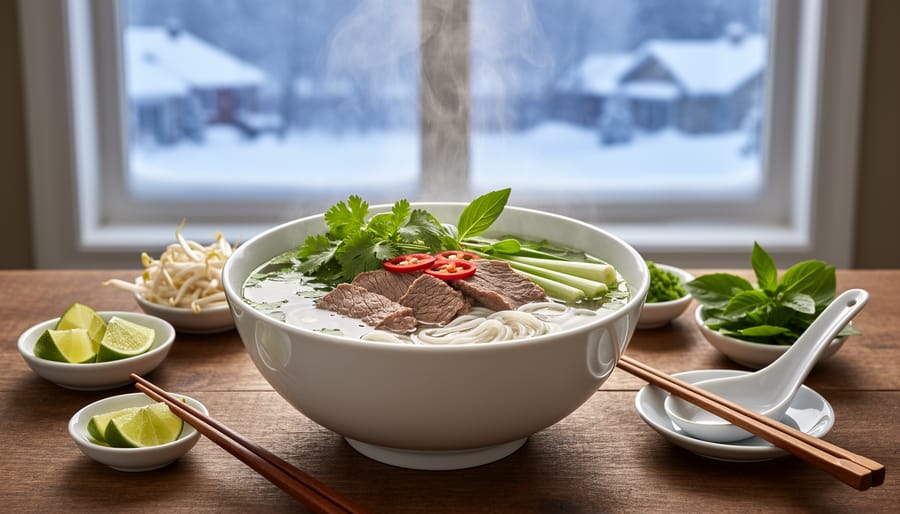
Phở begins with the broth, and everything else is built around it. Beef bones simmer for hours with charred ginger, charred onion, star anise, cinnamon, and cloves until the liquid turns clear, golden, and deeply savoury. Ladled over soft rice noodles and topped with thin slices of beef or tender chicken, it arrives with a scatter of green onion and a wedge of lime. Phở bò (beef) and phở gà (chicken) are the two classic versions.
The dish comes from northern Vietnam, where it took shape around Hanoi in the early twentieth century. The northern style is restrained: a clean broth, noodles, meat, and not much else, so the flavour of the stock does the talking. In the south, the bowl comes with a full plate of extras, including bean sprouts, Thai basil, sawtooth herb, sliced chilies, and little dishes of hoisin and sriracha. You tear, squeeze, and season it to your own taste.
To order, simply choose your protein. Rare steak, brisket, and tendon are common options, and if you’re unsure, ask for the combination bowl. Taste the broth before adding anything. It’s worth knowing how good it is on its own.
I still remember a bitterly cold January evening in Canada when a bowl of phở arrived with its steam fogging my glasses, and I understood why people call it a hug in a bowl. Like chicken noodle soup, it’s the food you reach for when you’re tired or under the weather. But phở has its own identity, one built on fragrance, patience, and balance.
2. Bánh Mì: A Baguette Sandwich Where Vietnam Meets France
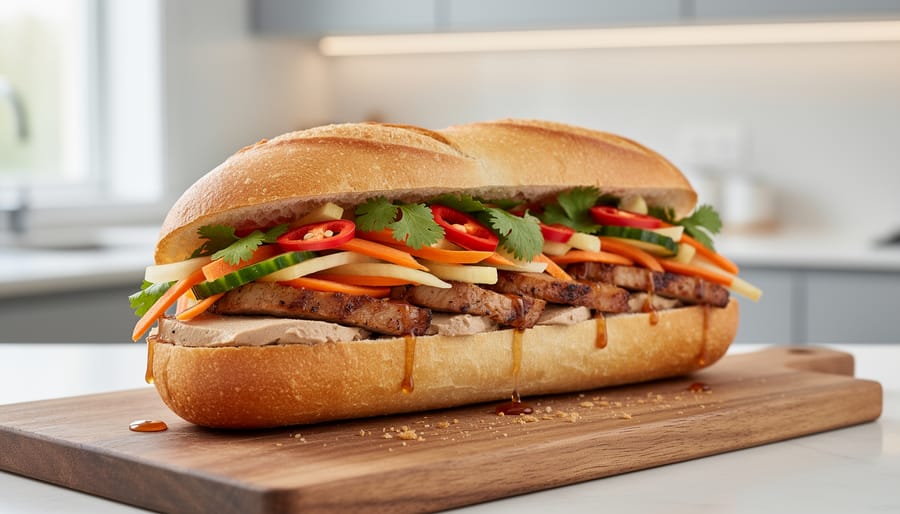
Bánh mì is the sandwich that proves a borrowed idea can become entirely your own. The baguette arrived with French colonisers in the nineteenth century, but Vietnamese bakers changed it. They made the loaf lighter, with a thin, shatteringly crisp crust and an airy crumb, partly by blending in rice flour. What began as a colonial import turned into a street food with its own identity.
The fillings are where the sandwich really sings. A smear of liver pâté and a swipe of mayonnaise sit underneath cured pork, grilled meat, or sometimes a fried egg. Then come the sharp, crunchy layers: pickled carrot and daikon, cucumber, fresh cilantro, and slices of chili for heat. Every bite swings between rich, tangy, herby, and spicy, and it never feels heavy.
I think of it as a cousin to the Canadian deli sandwich, but built on different instincts. Where a smoked meat sandwich piles on the meat, bánh mì balances it, letting the pickles and herbs do as much work as the protein.
For many of us in Canada, the first one came from a small neighbourhood shop with a glass counter and a line out the door at lunchtime. Those shops have become familiar fixtures in cities from Vancouver to Montreal, and the price is often a fraction of a restaurant meal. Order one the next time you want something quick, filling, and full of contrast.
3. Bún Chả: Hanoi’s Grilled Pork and Noodle Lunch
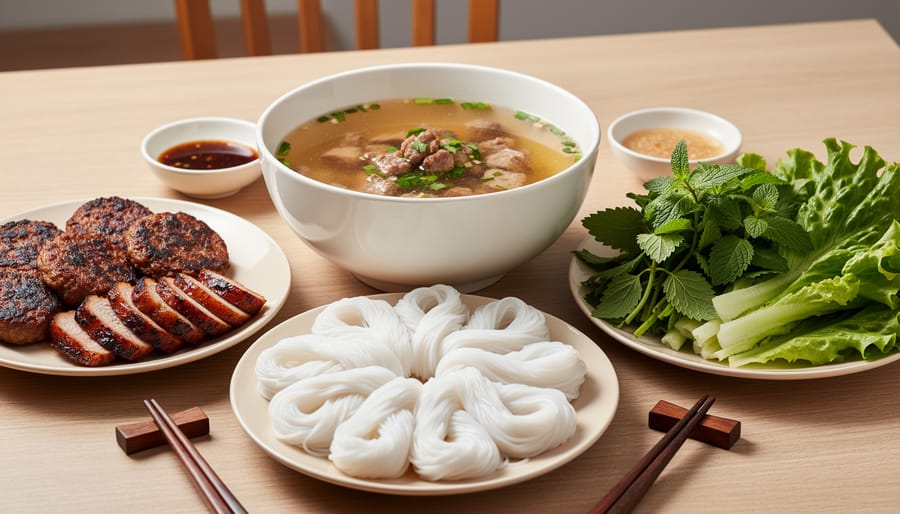
Bún chả is Hanoi’s lunchtime classic, and if you wander the Old Quarter around noon, you’ll smell it before you see it. Charcoal smoke drifts down the lane from a sidewalk grill, where pork patties and thin slices of marinated pork belly sizzle over glowing embers. The marinade leans on fish sauce, sugar, shallots, and garlic, which gives the meat a caramelised edge and a deep, savoury sweetness.
The pork arrives swimming in a bowl of warm dipping broth, a balanced mix of fish sauce, rice vinegar, sugar, and water, often with slivers of green papaya and carrot floating on top. Alongside comes a mound of cold rice vermicelli, a heap of fresh herbs like lettuce, perilla, and Vietnamese balm, and usually a small dish of sliced chilies and garlic to stir in.
Eating it is a gentle rhythm. Pick up some noodles with your chopsticks, dunk them in the broth with a piece of pork, add a few herbs, and enjoy the mix of warm and cool, smoky and bright.
I learned that rhythm at a crowded table of relatives in Hanoi, fumbling at first and dumping all my noodles into the bowl at once. My aunt laughed kindly, nudged the vermicelli plate toward me, and showed me how to take it a bite at a time so every mouthful stays fresh and balanced.
4. Gỏi Cuốn: Fresh Summer Rolls You Can Build and Share
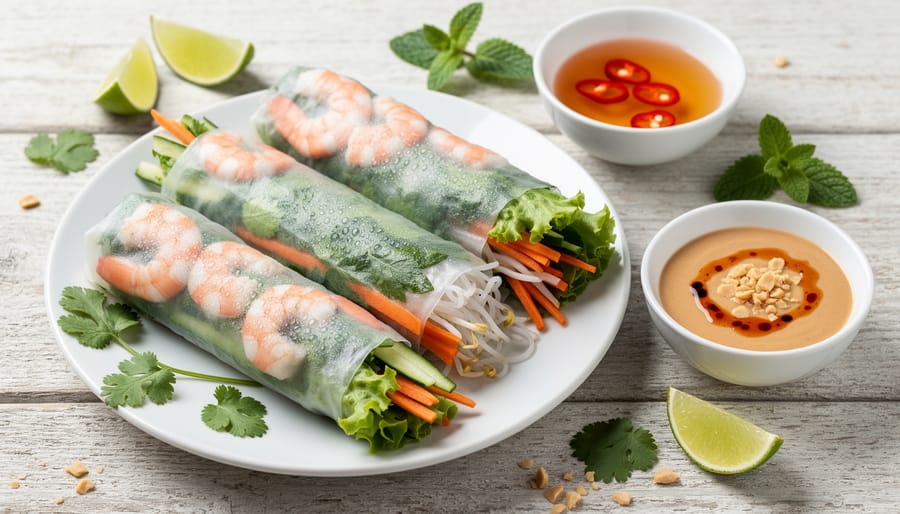
Gỏi cuốn are the dish that makes a table feel like a party. Each roll wraps shrimp, thin slices of pork, rice vermicelli, soft lettuce, and fresh herbs like mint and Thai basil inside a translucent sheet of rice paper. You can see all the colours through the wrapper, which is half the charm. Nothing gets fried, so the flavour is clean and cool, with the herbs doing most of the talking.
The dipping sauce matters just as much. Most restaurants serve a thick peanut sauce, sometimes mixed with hoisin and a spoonful of chili, and the nutty sweetness pulls the fresh ingredients together. Some families add garlic chives tucked into the roll so the green tips poke out the end.
In Vietnam, these often show up as a starter, or as a hands-on dinner where everyone assembles their own at the table. Dampen the rice paper, lay down your fillings, tuck the sides, and roll. My first rolls were lopsided and tore at the seams, and nobody minded one bit.
If you grew up with Canadian potlucks, you already understand the spirit. One person brings the platter of fillings, another the sauce, and everyone builds a plate to share. It is the same idea, just with more mint.
5. Cơm Tấm: Broken Rice and Grilled Pork from Saigon’s Streets
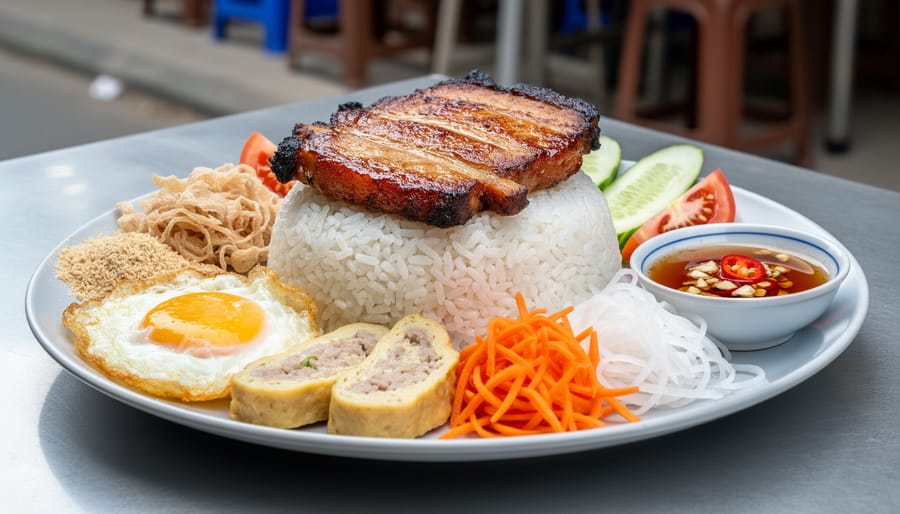
Cơm tấm literally means “broken rice,” and the name tells you everything about its beginnings. These were the fractured grains left over after milling, once considered too small and uneven to sell at full price. Poorer households and rice mill workers in the south ate them anyway, and cooks discovered that the smaller grains steamed up softer and fluffier, with a lovely tendency to soak up whatever sauce landed on them.
Over time, that humble ingredient became a Saigon street staple. The classic plate, often called cơm tấm sườn bì chả, piles broken rice beneath a charcoal-grilled pork chop marinated in lemongrass, garlic, and a touch of sugar. Alongside sit strands of shredded pork skin tossed with toasted rice powder, adding a chewy, nutty contrast. Then comes the chả, a wedge of steamed egg and pork meatloaf with glass noodles, soft and savoury. Pickled carrots, cucumber, and a fried egg round things out, and a small bowl of sweet-salty fish sauce dressing ties everything together. Spoon it over the rice and the whole plate comes alive.
I think of it as the answer for days when a soup just won’t do. It’s hearty, balanced, and filling in the way a Sunday roast with all the trimmings is, though the flavours are brighter. If you spot it on a Canadian Vietnamese menu, order it. Ask for extra sauce, because you’ll want it.
6. Bún Bò Huế: Central Vietnam’s Bold, Spicy Beef Noodle Soup
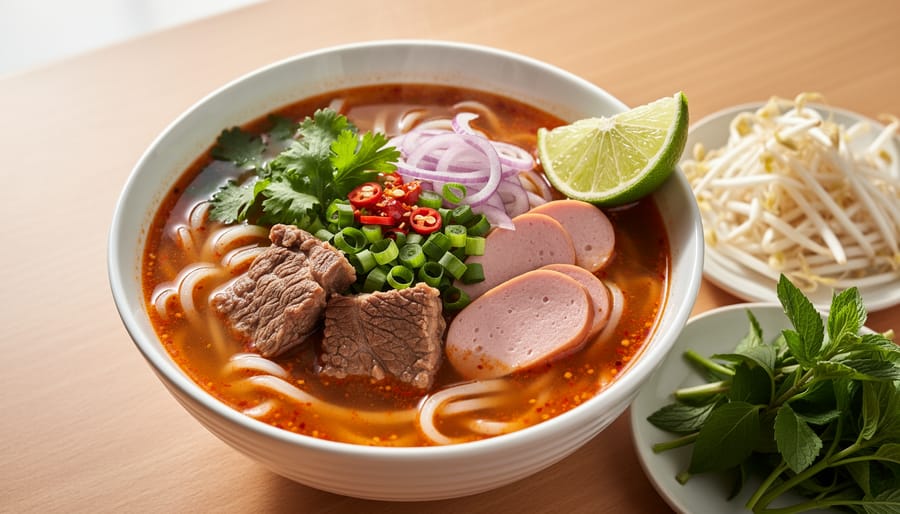
Bún bò Huế comes from Huế, the former imperial capital in central Vietnam, and it tastes like a place that never did anything halfway. The broth is built on beef and pork bones, then perfumed with bruised lemongrass and deepened with fermented shrimp paste. A slick of chili oil, tinted red-orange, floats on top. The noodles are thick, round rice noodles with a satisfying chew, quite different from the flat ribbons in pho.
Set the two side by side and the contrast is clear. Pho is clean, gently spiced, and soothing. Bún bò Huế is brighter, tangier, and more savoury, with lemongrass leading and heat following behind it. Central Vietnamese cooking has long favoured bolder seasoning, and this bowl is a good example of that tradition rather than anything extreme.
If it’s your first time, start by asking for the chili on the side. Most kitchens will happily oblige, and you can stir in the sambal-style chili paste a spoonful at a time. Your bowl usually arrives with sliced banana blossom, shredded cabbage, lime, and fresh herbs, so add what you like.
Toppings are part of the fun. Look for tender beef shank, slices of pork, and sometimes pork knuckle or a cube of congealed pork blood. That last one is optional, and you can simply ask to leave it out.
7. Bánh Xèo: The Crispy, Sizzling Pancake You Wrap in Greens
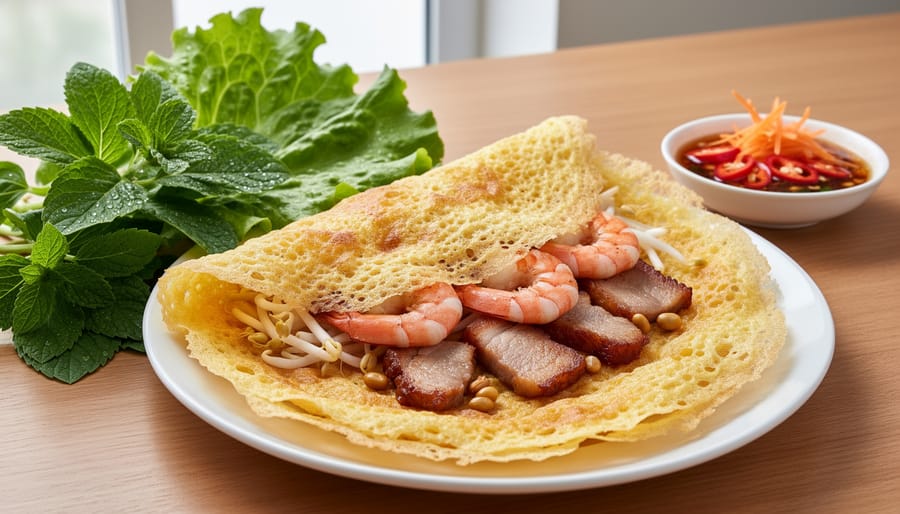
Bánh xèo takes its name from the sound it makes. Batter hits a hot, oiled pan, and the sizzle (“xèo”) is loud enough to turn heads across a room. That turmeric-yellow rice flour crepe is stuffed with pork, shrimp, and bean sprouts, then fried until the edges turn lacy and crisp.
The eating is half the fun. You tear off a piece, tuck it into a lettuce or mustard leaf with a few sprigs of mint and Thai basil, roll it up, and dunk the whole bundle in nước chấm, the sweet-tangy fish sauce dressing. It’s hands-on and a little messy, which is exactly why it works so well for sharing.
My first attempt was a small disaster. I overstuffed the leaf, the crepe cracked, and half my dinner ended up in my lap while my aunt laughed and quietly showed me how to fold the sides in first. Now I know to keep the leaf small and the roll snug.
Families often cook bánh xèo for gatherings, so it turns up at many a table when people come together for Vietnamese celebrations. If you’re curious how those gatherings line up with the calendar, take a look at Tet festival timing in Vietnam and Canada.
8. Chè: Sweet Dessert Soups and Puddings to End the Meal
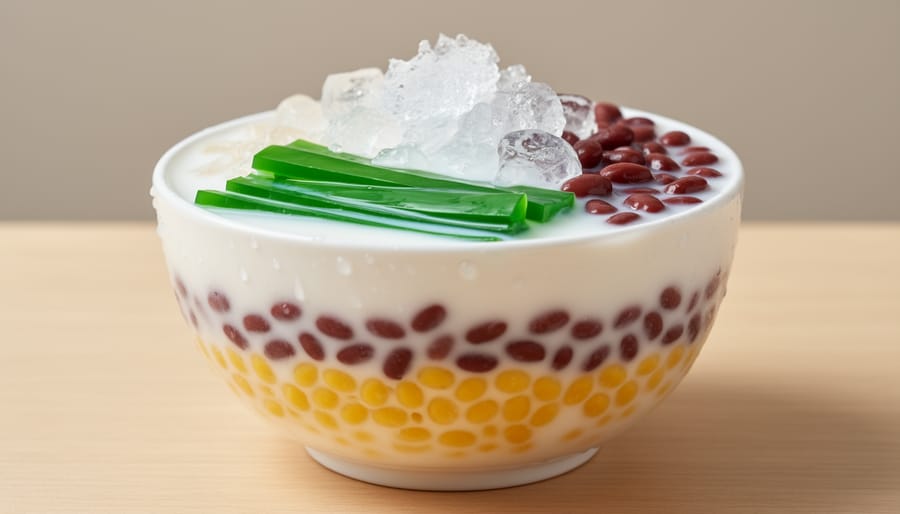
Chè is less a single dish than a whole family of sweet soups, puddings, and drinks, and walking up to a dessert counter that offers a dozen kinds can feel wonderfully overwhelming. The best-known is chè ba màu, the “three-colour dessert,” built in glass layers of sweet mung bean, red kidney beans, and green pandan jelly, all crowned with coconut milk and crushed ice. You stir everything together with a long spoon, and each bite lands somewhere between creamy, chewy, and refreshing.
Other versions lean in different directions. Chè chuối pairs bananas with tapioca pearls in warm coconut sauce, while chè đậu xanh is a smooth mung bean soup that is comforting on a chilly evening. Some are served hot, some over ice, and some are simply room temperature, depending on the weather and the mood.
Chè shows up in everyday life, as an afternoon treat or a street-side snack after school, but it also belongs to celebrations. Families often prepare special versions for ancestor offerings and holiday tables, and if you are curious about how those traditions travel abroad, you can read about Tet in Canada.
What I love most is the gentleness. Compared with a heavy slice of cake, chè is lightly sweet and often more textural than sugary, a soft landing at the end of a big meal.
Reading a Vietnamese Menu in Canada: Quick Tips for Ordering With Confidence
Start with the herb plate. That heap of basil, bean sprouts, lime, and sliced chilies beside your phở is yours to tear up and add as you like, so taste the broth first and adjust from there. Pronunciation is gentler than most people fear: say “fuh” for phở, “bun mee” for bánh mì, and “goy kwon” for gỏi cuốn. Staff almost always appreciate the effort, and a smile covers the rest.
On spice, just ask, “Is the chili very hot?” Most kitchens keep it on the side, which is handy for bún bò Huế, where heat builds as you go. Fish sauce dressing and hoisin are for dipping or drizzling, so use them freely.
If you’re bringing friends or relatives who are new to Vietnamese food, order gỏi cuốn to start and let everyone build their own rolls. Sharing is the whole point.
Vietnamese Dishes FAQ: Common Questions Before Your First Bowl
Before you order, a few questions come up again and again, and the answers might save you a moment of hesitation at the counter.
How do you pronounce phở?
Say it like “fuh,” with a rising tone, almost as if you’re asking a question. Most servers are happy to hear any attempt, and pointing at the menu works perfectly well too.
Is Vietnamese food always spicy?
Not at all. Heat usually arrives on the side, through fresh chilies, chili sauce, or sate, so you control it. Bún Bò Huế is the one dish on this list that brings real warmth in the broth itself.
Which dishes suit vegetarians?
Gỏi cuốn can often be made with tofu, and chè is typically plant-based, built on beans, jelly, and coconut milk. Ask whether the dipping sauces or broths contain fish sauce or shrimp paste, since these are common in Vietnamese kitchens.
How do the dishes differ by region?
The north tends toward subtle, balanced flavours, as in a clean bowl of phở or bún chả. The centre leans bold and spicy, while the south is sweeter and more generous with herbs, as in cơm tấm and bánh xèo.
If you’re still wondering where to begin, phở is the friendliest first bowl. It’s gentle, familiar in shape, and you can season it to your own taste at the table. Bánh mì is a close second when you want something quick and portable, much like grabbing a good deli sandwich, only with pickled vegetables and a little fresh chili.
From a steaming bowl of phở to the last spoonful of chè, these eight dishes carry the same quiet promise: food tastes better when it’s shared. They link a grandmother’s kitchen in Huế to a bánh mì counter in Toronto, and a Saigon street corner to a potluck table in Vancouver, proving that a good meal can travel across borders without losing its heart. Whatever your own family favourite is, I’d love for you to share it, or simply try one new dish this week and see where it takes you.