
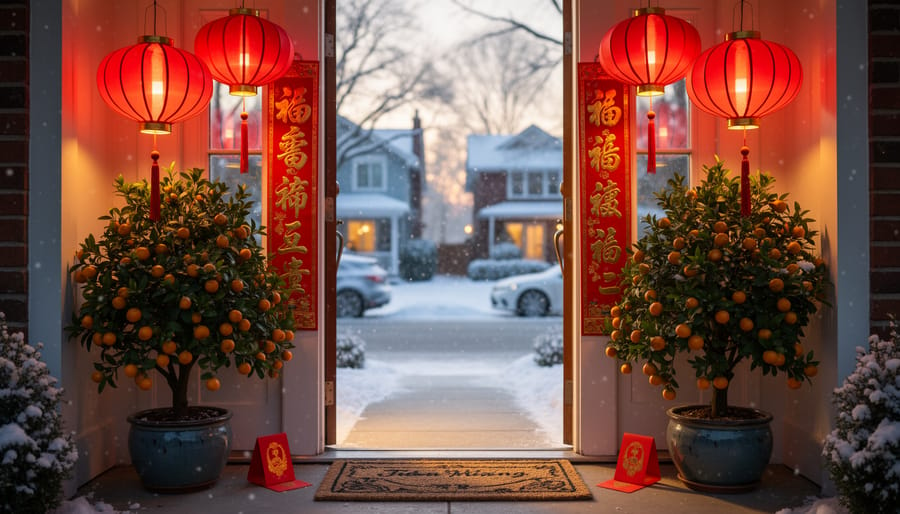
When Are Tet Festival Celebrations? Timing the Festivals in Vietnam and Canada
November 8, 2026Tet always lands in late January or February, on the first day of the first lunar month, so the exact date shifts from year to year and has no fixed place on the Gregorian calendar. The celebration itself stretches well beyond a single day. Most families begin preparing a week or more ahead, with the heart of the holiday running about three days, and the Tet mood often lingers into the first weeks of the new year. Your timing depends on where you are. In Vietnam, shops, markets, and many restaurants close for several days, and trains and buses fill up fast. In Canada, there’s no public holiday, so families often fit the feast, the red envelopes, and the temple visit around work schedules and a nearby weekend. I still remember my own relatives in Toronto gathering on the closest Saturday, with the same dishes and the same laughter, just a few days off the official date. The main thing that moves the calendar is the lunar cycle, and regional customs and your own city shape the details. This guide breaks Tet into clear timing windows so you can plan travel, family gatherings, or a first visit to a community celebration. For this year’s confirmed date, check an official lunar calendar or your local Vietnamese community organization.
The Quick Answer: When Tet Falls and How Long the Celebrations Last
Tet Nguyên Đán falls on the first day of the first lunar month. On the Gregorian calendar, that usually lands somewhere between late January and mid-February. Because Tet follows lunar calendar cycles rather than the 365-day year Canadians plan around, the date shifts from one year to the next.
Officially, Vietnam recognizes a handful of public holiday days. In practice, though, families treat Tet as a whole season. Preparations start a week or two beforehand, with cleaning, shopping, and cooking. The celebrations proper run through the first few days of the new year. Then things taper off gradually over the following week or so, as shops reopen, relatives head home, and the leftovers get finished.
I think of it as a long exhale rather than a single day. Anyone planning a trip or a family gathering is best served by thinking in terms of that whole window.
To confirm the exact date for any given year, check an official lunar calendar or a Vietnamese community organization near you. Those sources will always be more reliable than a date you read in an article written months earlier. Once you have the date, work outward from it, and you’ll be ready for the lead-up as well as the main event.
Tet Timing Windows: From the Weeks Before to the First Days of the New Year
The Run-Up: Cleaning, Shopping, and Kitchen Gods (Weeks to Days Before)
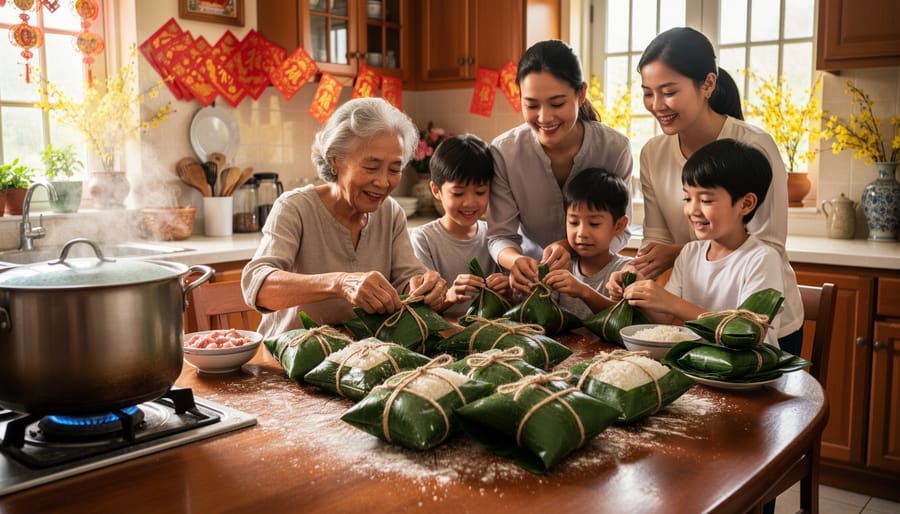
The first sign of Tet for me is never the calendar. It’s the smell of a Vietnamese grocery store in Vancouver a week out, when the aisles fill with carts stacked with sticky rice, mung beans, and pork belly, and someone’s auntie is gently elbowing past me toward the last tray of mứt. Canadians will recognize the feeling from the mad dash before Christmas, only here the shelves overflow with kumquat trees and branches of yellow mai blossoms instead of tinsel.
Preparation in Vietnamese households follows a loose rhythm, and it varies by region and family. A typical sequence looks like this:
- Start a deep clean of the home early, wiping down altars, windows, and corners before the new year arrives.
- Settle outstanding debts and loans, so you carry fresh luck rather than old obligations into the year.
- Buy new clothes, often for the children first, to wear on the first days of Tet.
- Visit the flower market for peach blossoms, mai, or a potted kumquat tree to anchor the main room.
- Honour the Kitchen Gods around the 23rd day of the twelfth lunar month.
- Make the final shopping trip for fresh food, since many shops close for several days.
That Ông Táo ritual is a lovely one. Families believe the Kitchen Gods travel to heaven to report on the household, so offerings are made before their departure, and you can read more about how the Kitchen Gods observed on 23rd fit into Vietnam’s year-end traditions.
If you’re visiting a Vietnamese neighbourhood during this stretch, a little Canada travel planning goes a long way: go early in the day, bring patience, and enjoy the cheerful chaos.
Giao Thừa and the First Three Days: The Heart of Tet
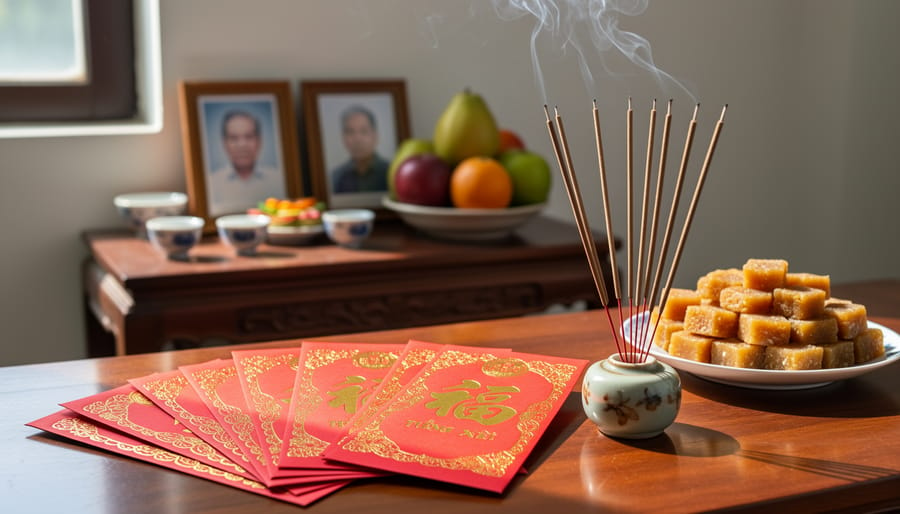
When the clock edges toward midnight on the last night of the lunar year, many Vietnamese homes grow unusually quiet. This is Giao Thừa, the moment the old year hands over to the new. Families gather around a freshly set ancestor altar, laden with fruit, flowers, incense and sometimes a few favourite dishes of relatives who have passed. In some households, a short prayer is offered at the doorway or in the courtyard to welcome the new year. In Vietnam, fireworks may light the sky, while in Canada the same moment often unfolds with a hush at the dinner table and the faint sound of a neighbour’s television counting down.
The three official days of Tet each carry their own focus, summed up in a saying many families know: mùng một Tết cha, mùng hai Tết mẹ, mùng ba Tết thầy. On the first day, attention turns to the immediate family and the father’s side, and people tend to stay close to home. The second day is traditionally for visiting maternal relatives and friends. The third honours teachers and mentors, a reminder of how deeply learning is respected. Not every family follows this order exactly, and some blend the days to fit work schedules and travel distances.
Two customs often spark curiosity. The first is xông đất, the “first footing.” The first person to cross the threshold after midnight is believed to shape the household’s fortune for the year, so families often invite someone they consider kind, successful or lucky, and some ask a visitor to arrive early by arrangement. The second is lì xì, small red envelopes holding crisp new bills, given with good wishes. Children receive them most often, though elders may be given envelopes too, and the amount matters far less than the blessing.
If you’re curious, you can think of xông đất as a bit like the Scottish tradition of first-footing at Hogmanay, which some Canadian families also keep. Still, practices vary by region, religion and household, so treat all of this as a thread of tradition rather than a rulebook.
Winding Down: Festivals, Reopenings, and the Tail End of the Season
By the fourth or fifth day, Tet starts to exhale. The formal visiting slows, the houses quiet down, and families begin picking up the ordinary threads of life again. In Vietnam, the shift happens in stages rather than all at once. A few street vendors and corner cafés open first, often on the third or fourth day, followed by larger shops, markets, and restaurants over the course of the first week. Some owners wait until the seventh day or later, especially in smaller towns where relatives are still gathered. If you’re travelling, don’t be surprised to find a favourite noodle stall still shuttered. Think of it as the city catching its breath.
The mood changes too. The urgency of the first three days gives way to lingering lunches, card games, and leftover bánh tét sliced and fried until golden at the edges. Many families treat this tail end as the softest part of the holiday, when nobody has to be anywhere in particular.
Celebrations don’t always end neatly, either. Some communities hold temple gatherings, lion dance performances, and neighbourhood parties well into the following weeks, and the season formally closes in some traditions around the middle of the first lunar month.
In Canada, this stretching-out is even more noticeable. Because most people are back at work and school within a day or two, community Tet festivals are usually scheduled on weekends near the lunar date rather than on the exact day. You might find one the weekend before, or the weekend after, depending on when a hall can be booked. I’ve learned never to assume. Instead, check with your local Vietnamese community association, temple, church, or cultural centre for current event details, and look at their social media pages a few weeks ahead. Schedules shift from year to year, and a quick message can save you a missed party.
What Shifts Your Tet Timing: Region, Family Tradition, and Where You Are
Several things decide when and how you experience Tet, and they stack on top of each other:
– The lunar calendar. The first day of the first lunar month moves on the Gregorian calendar every year, so always confirm the date with an official lunar calendar before you plan anything.
– Region within Vietnam. The north, centre, and south each have their own flowers, dishes, and rhythms. Northerners often favour peach blossoms and bánh chưng, while many southern families display yellow mai and make bánh tét.
– Family and generational tradition. Some households keep every ritual, from the altar to the first-visitor custom. Others keep things simple, especially younger families.
– Where you are. In Vietnam, much of the country slows to a near standstill. In Canada, many families celebrate around work schedules and gather on the nearest weekend. For anyone balancing Tet with a job or study permit, our work in Canada updates may help with planning time off.
If you’re visiting Vietnam during Tet, think of it as a different kind of trip. Transport and hotels fill up fast, and many businesses close for several days, so the busy, honking streets you might expect turn quiet and almost hushed.
Those calm streets are worth savouring. Families are home together, doors are open, and the whole country seems to exhale at once.
Tet in Canada: Weekend Festivals, Restaurant Menus, and Family Tables
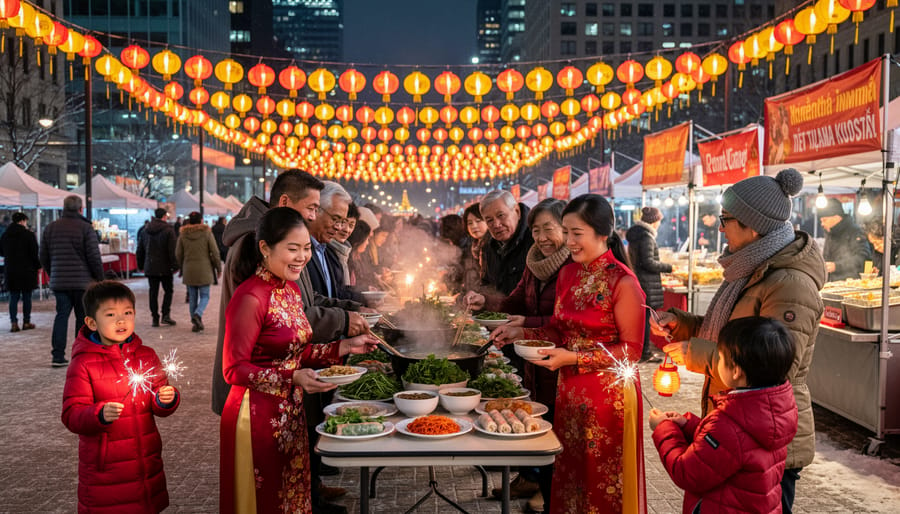
Across Canada, Vietnamese communities have made Tet their own. Weekend festivals pop up in community halls and temple grounds near the lunar date, since most people still have work on the day itself. Many families also visit a Buddhist temple or a Vietnamese church early in the new year to offer prayers for health and good fortune. If you’re planning your 2026 trip to a Canadian city with a Vietnamese neighbourhood, it’s worth checking local community organizations for current festival schedules rather than assuming a date.
For food lovers, the best Tet experiences often happen at the table. Restaurants and bakeries tend to roll out holiday specials in the weeks before the new year, and popular items sell out fast. Here’s what to look for:
- Bánh chưng: a square sticky rice cake with mung bean and pork, symbolizing the earth and strongly tied to northern tradition.
- Bánh tét: the cylindrical southern cousin, often wrapped in banana leaves, sometimes with sweet banana filling.
- Thịt kho trứng: braised pork and eggs in caramelized sauce, a comforting staple of the southern Tet table.
- Canh khổ qua: bitter melon soup, traditionally eaten to wish away hardship in the year ahead.
- Mứt Tết: candied fruits and roots, such as coconut, ginger, and lotus seeds, offered to guests as a sweet welcome.
My practical tip is to call or message ahead. Many kitchens take pre-orders for sticky rice cakes and sweet boxes, and some only make them in limited batches. Ask what’s available, how much notice they need, and whether items can be picked up closer to the holiday so everything stays fresh. A little planning goes a long way, and a shared plate of mứt on a cold Canadian evening feels wonderfully like home.
After Tet: Aftercare for the Celebration and Keeping the Spirit Going
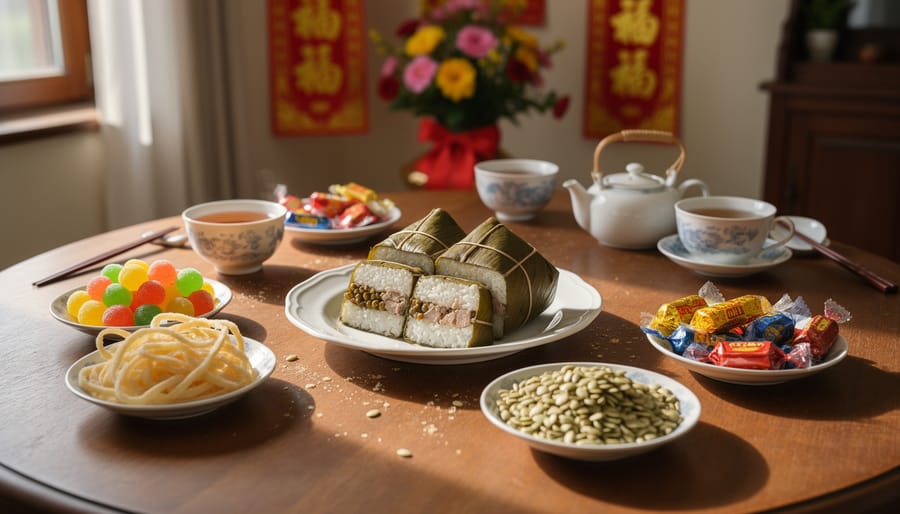
A few days after Tet, the house goes quiet in the best way. I remember sitting at my aunt’s kitchen table with a cup of tea, surrounded by half-empty plates of mứt and a fridge full of leftovers, feeling content and a little sleepy. The noise had faded, but the warmth stayed. That stillness is part of the celebration too.
Families usually put away the altar offerings after the first few days, often once the incense has burned down on a day they consider auspicious. Fruit and sweets get shared and eaten, since it’s good luck to enjoy what was offered. Then everyone drifts back to work and school, carrying the new year’s good wishes with them. If you’re settling into life here, even something as practical as reading about H-1B to Canada can feel lighter when you’ve started the year with family close.
Here’s a simple way to wrap things up:
- Tidy the altar respectfully: remove offerings gently, share the fruit and sweets, and let incense finish burning before clearing it away.
- Store festive foods safely: wrap bánh chưng or bánh tét tightly and refrigerate, then reheat by steaming or slicing and pan-frying until the edges turn golden and crisp.
- Send thank-you messages to hosts, whether a quick text or a handwritten note.
- Record family recipes and memories, with photos and a few lines about who made what.
- Mark next year’s lunar date on your calendar, using an official lunar calendar to confirm it.
Custom also asks for a little mindfulness in the first days. Many families avoid sweeping or taking out the rubbish right away, so luck isn’t swept out the door. Some simply tidy gently and wait.
If you’re not Vietnamese, there are lovely ways to follow up. Return to a favourite Vietnamese restaurant and ask what the kitchen made for Tet. Learn to make thịt kho trứng from a friend or a family recipe. Or plan to join a community festival next year, arriving curious and open. A small thank-you to anyone who welcomed you is always appreciated, and it keeps the spirit of the season going long after the red envelopes are put away.
Common Questions About Tet Festival Celebrations Timing
A few questions come up again and again when friends ask me about Tet timing, so here are the ones I hear most. If you’re new to the holiday, think of this as the friendly cheat sheet I wish I’d had years ago.
Why does the Tet date change every year?
Tet follows the lunar calendar, so it falls on the first day of the first lunar month rather than on a fixed Gregorian date. That’s why it lands somewhere between late January and mid-February. Check an official lunar calendar for the exact day.
Is Tet the same as Chinese New Year?
They often fall on the same day, but they’re distinct celebrations with their own foods, rituals, and meanings. Tet has deeply Vietnamese traditions, like bánh chưng, the kitchen gods, and the Giao Thừa midnight moment.
How many days is Tet officially?
Vietnam recognizes several days of public holiday, but the real celebration season stretches for weeks before and after. Most families treat the first three days as the heart of it.
Can visitors join Tet celebrations in Canada?
Absolutely. Community festivals, temples, and restaurants are often happy to welcome curious neighbours, and a respectful, open attitude goes a long way.
Two more quick answers. Saying “Chúc mừng năm mới” to Vietnamese friends is not only okay, it usually gets a big smile. Don’t worry if your pronunciation isn’t perfect; the effort is what people remember. If you’re invited to a gathering, bring something simple and thoughtful, like a box of mứt Tết, fresh fruit, or flowers, and keep in mind that red envelopes are traditionally for children and elders, so ask the host if you’re unsure.
Because Tet timing can also affect travel plans for relatives and newcomers, it’s worth keeping an eye on immigration updates if you’re arranging a visit or a family reunion around the holiday. For the exact current-year date and any local events, your best sources are an official lunar calendar and your nearest Vietnamese community organization.
When I think back to that first whiff of bánh chưng simmering and the sight of kumquat trees crowding a market in the middle of a Canadian winter, I realize it answered the question this whole guide has circled. Tet isn’t really a single date. It’s a season, one that begins with scrubbed floors and crowded markets, peaks at the midnight hush of Giao Thừa, and lingers in leftovers, visits, and a few more weekends of community festivals long after the calendar has moved on.
That season now travels across the Pacific. In Vietnam it can mean quiet streets and closed shops. In Canada it might mean a workday morning with a red envelope tucked in your pocket, then a weekend festival or a family table set a little later than the lunar date. Both are real Tet, shaped by where people live and how they keep their traditions.
So check an official lunar calendar for the exact day, plan ahead for travel or restaurant orders, and look to local community organizations for current event details. If you’re new to the holiday, come with curiosity and respect: ask questions, share a dish, say thank you.
Whether you’re at a family table, a festival ground, or your neighbourhood Vietnamese restaurant, you’re welcome in the celebration. Chúc mừng năm mới, and happy new year. Come back soon for more Vietnam Meets Canada stories.